
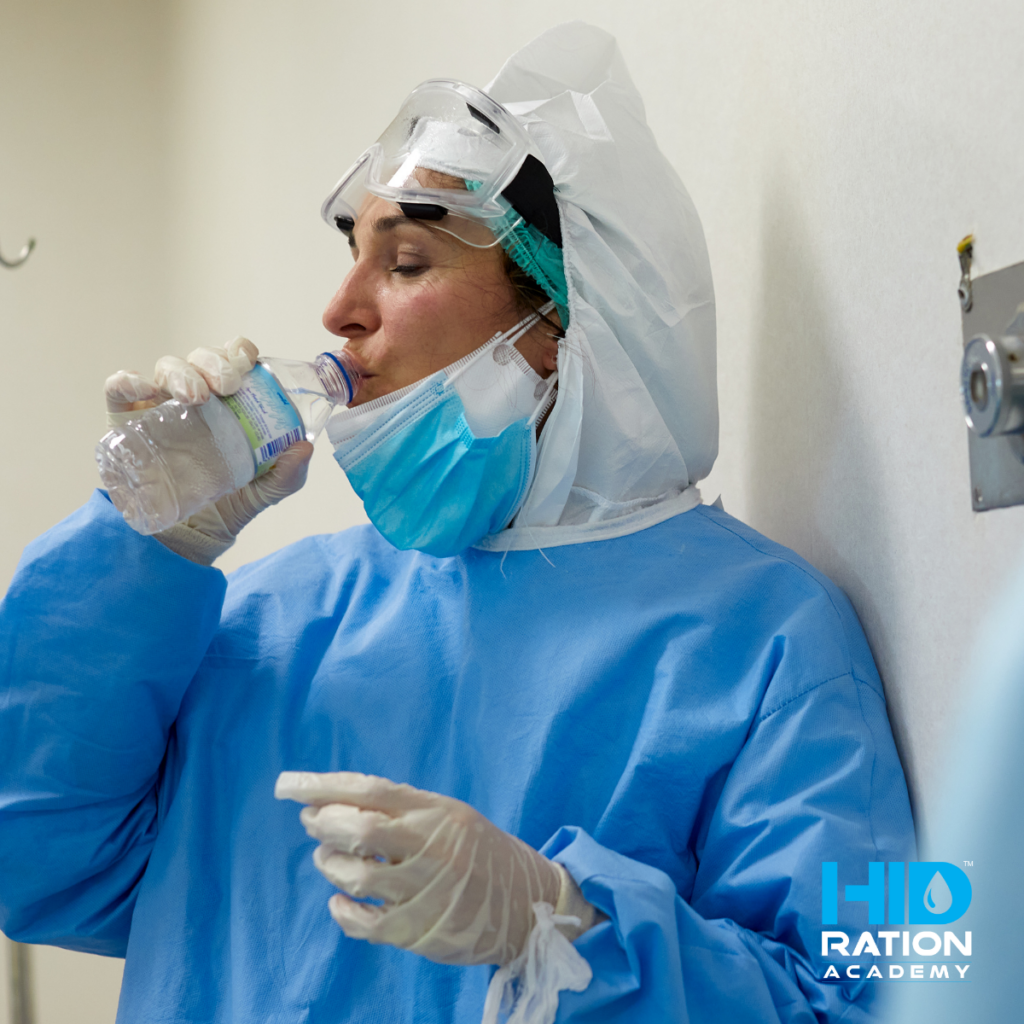
Dehydration can significantly impair concentration and cognitive function, directly affecting the speed of decisions and actions. It can therefore be hazardous to the health of doctors or those caring for patients, but it can also be a direct threat to life for the patient themselves.
What could be the reason for this? First and foremost, the intensive way of working - employees lack adequate breaks where they can find a moment to regularly rehydrate. Added to this is the constant stress, time pressure or the need to work in personal protective equipment for long periods of time.
The Royal College of Nursing (RCN) already warned about dehydrated nurses problem in 2018. Nurses who are dehydrated could be making critical decisions for patient safety. The RCN urges people to take care to stay hydrated, to take advantage of breaks and, in particular, to remember to hydrate also during the pressure of busy workloads. Medical staff need to remember that breaks are not a 'luxury' or a privilege - they are a necessary time in which they can take care of themselves and thus care for patients more effectively. A tired, dehydrated medical worker can pose a danger to themselves as well as the patient.


 English
  Polish