
Skip to content

HID-RATION

Prowadzenie pojazdu w stanie odwodnienia może być równie niebezpieczne jak prowadzenie pojazdu po pijanemu – liczba wypadków wzrasta dwukrotnie – wskazują badania Uniwersytetu w Loughborough. Według badań opublikowanych w czasopiśmie naukowym Physiology and Behavior, na które w swoim artykule powołuje się Wall Street Journal, okazuje się, że odwodnienie podczas jazdy może być równie niebezpieczne jak prowadzenie pod wpływem alkoholu

Dehydrated drivers as dangerous as drunk drivers?

odwodnieni kierowcy przyczyna wypadków

Driving while dehydrated can be just as dangerous as drunk driving - with accidents doubling in number, Loughborough University research suggests.

Dehydration while driving can be just as dangerous as driving under the influence of alcohol, according to research published in the scientific journal Physiology and Behavior and cited in an article in the Wall Street Journal.

During high temperatures, heat-related ailments put all road users at risk. However, high temperatures are not the only factor contributing to dangerous driving behaviour, although they are a direct and so far poorly studied cause.

Researchers from the Department of Sport, Exercise and Health Sciences at Loughborough University in the UK conducted simulated driving tests with a group of volunteers who were both hydrated and dehydrated. The tests involved two hours of driving on a simulator with a variety of obstacles, including bends, speed bumps, slow-moving vehicles and other obstacles to overcome.

On the first day, test participants were given one glass of water to drink every hour. The researchers counted 47 traffic incidents that day. On the next day of the test, participants were only given a few sips of water per hour and the number of incidents, including lane leaving, delayed braking and invading or crossing lines separating lanes or shoulders, increased to 101! This result is comparable to that of a driver with 0.4 per mille of alcohol in his blood.

Why did this happen? When we are dehydrated, our brain's reactions become somewhat restricted. This can lead to a number of problems that affect mental clarity, reaction time, muscle function and even our mood. Dehydration also affects blood volume and density, causing headaches and dizziness.

It is worth remembering that even a small 3% dehydration is comparable in its effects to 0.8‰ blood alcohol concentration. According to a study published by the British Medical Journal, the risk of fatal accidents with a blood alcohol concentration of 0.5‰ to 0.9‰ increases by a factor of 10 compared to a concentration of 0.0‰. Above a blood alcohol concentration of 1.2‰, the risk is already 200 times greater , and this applies to both the probability of an accident and its consequences. A condition corresponding to 0.5‰ concentration is characterised by impaired logical thinking, coordination, precision or self-control. The driver has an impaired ability to perform even basic manoeuvres - braking, turning or parking.

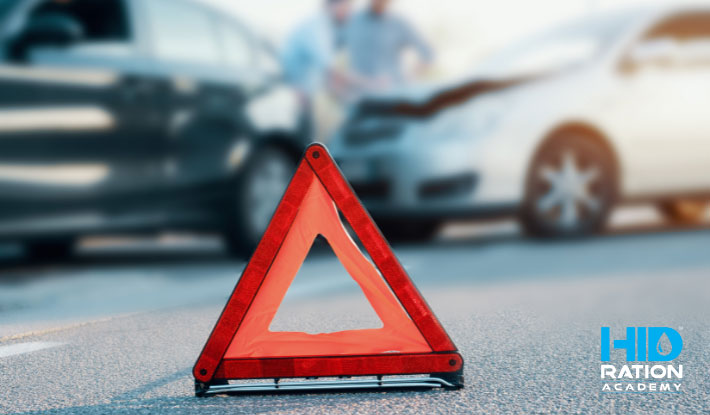
odwodnieni zawodowi kierowcy

Some drivers try not to drink much water on the road, fearing they will have to stop too often to use the toilet. But the effects of dehydration are too dangerous to ignore, and the breaks, while slightly increasing journey time, also make the journey safer.

 Another mistake drivers often make is to 'turn up' the air conditioning when they feel tired or sluggish. If you feel tired because you are dehydrated, the air conditioning will dehydrate you further by drying the air and removing the exhaled water vapour with it.

Your body is considered dehydrated when it loses water equal to two per cent of its weight. However, negative effects can start to appear after just one per cent water loss. A sure way to tell if you are dehydrated is the colour of your urine. It should be mostly clear, and if it is too yellow, it could mean you need more fluids. Travelling at higher altitudes or in very high temperatures obviously increases the risk of dehydration. There is no magic number for how many litres of water you need to drink a day to keep your body in the required shape, but you should take as a rule of thumb that you simply need to drink plenty of water before and during long journeys. 

odwodnieni kierowcy przyczyną wypadków

The feeling of thirst comes too late and our body is then already in a phase of slight dehydration, which causes delayed motor reactions and a general feeling of discomfort. This applies to professional drivers as well as anyone else driving a motor vehicle. Drinks containing electrolytes are also good, and hypotonic drinks are particularly recommended, ensuring faster penetration of water and electrolytes into the cells. Remember also to drink small amounts of fluids at equal intervals; drinking a whole bottle of water in one go will not hydrate the body and, on the contrary, the water taken in will be quickly excreted. Also avoid sweetened, carbonated or caffeinated drinks. All these substances have a negative effect on the body's water balance.


Most importantly, however, let's not worry about taking breaks to use the toilet and refill water. It is better to take a little extra time than to put yourself and others at risk.

So, paraphrasing the famous slogan 'drive, don't drink' , we encourage you to put this rule into practice 'haven't drunk water? don't drive'.

en_GBEnglish